
If you look at how the insurance industry has historically managed catastrophe risk, it has always been bound to a specific calendar cycle. You buy your CAT models once a year, you set your underwriting guidelines, and you assume the baseline environment will remain relatively static until the next renewal cycle.
Being located in St. Petersburg, Florida, we see firsthand how flawed that assumption has become. The real threat to a modern property portfolio isn’t just the headline-grabbing major storm, it’s the fact that environmental baselines are shifting mid-year, right under our feet.
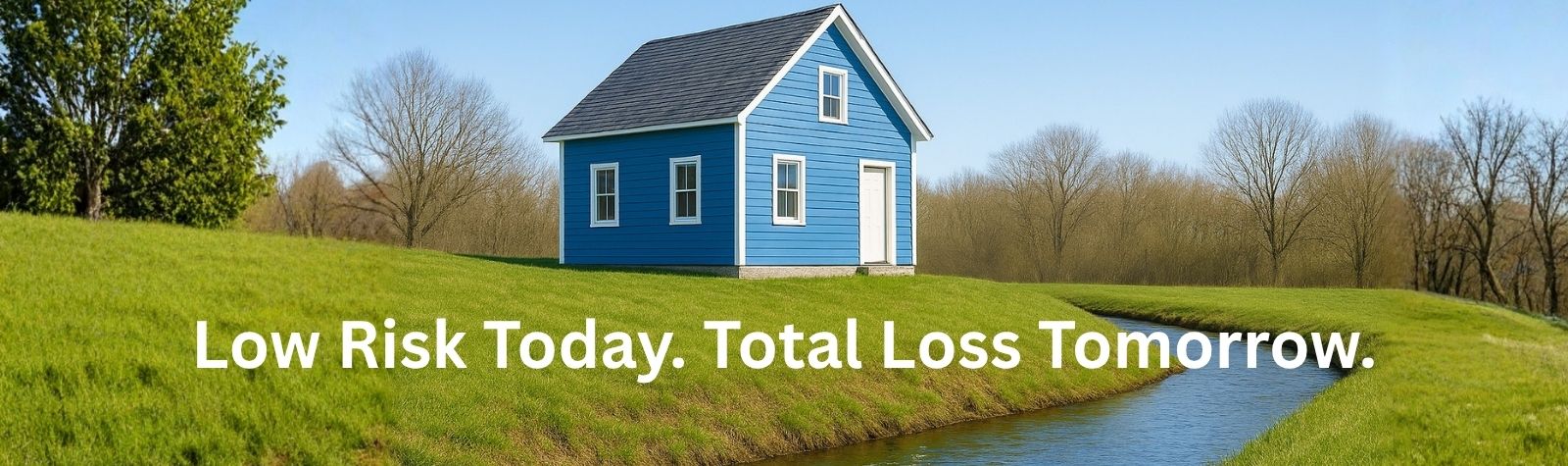
For example, a property that appeared relatively low-risk on prior catastrophe models can become significantly more exposed within a single season as conditions shift. In Florida and other coastal markets, evolving hurricane activity, storm surge patterns, and localized rainfall intensity can quickly change wind and flood exposure well before updated models or portfolio monitoring tools reflect the shift. Similarly, nearby development and drainage changes can further alter flood vulnerability ahead of traditional reporting cycles.
When you rely on historical data or annual reporting cycles to set today’s risk appetite, you are underwriting a version of reality that no longer exists on the ground.
The short version
Embedded exposure intelligence brings live hazard data into the underwriting workflow, so an MGA can respond when conditions change between annual CAT model updates. If wildfire, flood or storm exposure rises in a specific area, the system can flag submissions or adjust underwriting thresholds at the point of sale. That helps teams avoid writing against an outdated view of risk.
What is Embedded Exposure Intelligence?
Embedded Exposure Intelligence refers to the real-time integration of live environmental hazard data directly into an MGA’s core underwriting system. It replaces static, annual catastrophe models with dynamic, mid-cycle data streaming. By connecting live risk signals, such as soil moisture indices, satellite-based brush density mapping, and real-time hydrological telemetry, directly into commercial insurance rating software, MGAs can instantly adjust underwriting thresholds at the point of sale.
The Operational Lag of the Annual Model
The structural problem most MGAs face isn’t a lack of sophisticated data, it’s the lifecycle of that data.
Standard hazard datasets provide invaluable macro insights, but they create severe operational blind spots because they cannot account for real-time environmental degradation. Let’s examine how this gap plays out across a standard underwriting cycle:
- Mid-Cycle Wildfire Volatility: Flash droughts elevate a territory’s wildfire exposure weeks before annual static CAT models are updated.
- Real-Time Hydrological Shifts: Micro-climate changes and terrain alterations disrupt localized flood patterns long before macro-portfolio monitoring cycles identify the trend.
- Unnoticed Exposure Accumulation: Risk aggregates silently between quarterly reporting cycles, allowing an MGA to inadvertently over-index in newly volatile geographic zones.
The issue isn’t the accuracy of the model, it’s the timing. If your underwriting guidelines take months to evolve while environmental conditions shift in weeks, your team is consistently writing yesterday’s risk.
Shifting Risk Awareness to the Point of Sale
This is where embedded exposure intelligence becomes an operational necessity. Instead of treating catastrophe exposure as a retrospective modeling exercise or a year-end review, you integrate live environmental risk signals directly into the daily underwriting workflow.
By streaming modern hazard data directly into your insurance rating engines and other core systems, you give your team the agility to match the speed of environmental change.
If live telemetry indicates that a specific geography’s vulnerability has spiked, your underwriting system handles it automatically. The system can dynamically adjust underwriting thresholds, tighten appetite in newly elevated exposure zones, or flag a submission for a pricing reevaluation, right when the underwriter is looking at the screen. You stop treating risk appetite as a static document and start treating it as a responsive, real-time strategy.
Building a More Adaptive Underwriting Strategy with West Point Technologies
At West Point Technologies, we help MGAs modernize underwriting operations with connected systems, automated workflows, and real-time exposure visibility. Our platform supports structured data management and integrated underwriting processes that help teams respond more effectively as environmental conditions evolve.
By embedding exposure intelligence directly into underwriting workflows, MGAs can improve portfolio visibility, strengthen underwriting discipline, and make faster decisions as risk conditions shift.
The result is a more adaptive underwriting operation that helps reduce exposure surprises while supporting scalable growth.
Frequently asked questions
Why can annual CAT models leave a gap? Conditions can change between model updates. Flash droughts, local flood shifts and growing concentrations of risk may affect a portfolio before the next reporting cycle catches up.
What data can feed an embedded exposure workflow? The post describes soil moisture indices, satellite-based brush density mapping and real-time hydrological telemetry as signals that can connect to the rating engine.
How can an MGA respond when exposure changes? The underwriting system can adjust thresholds, tighten appetite in an affected area or flag a submission for pricing reevaluation at the point of sale.
Ready to strengthen underwriting visibility and respond faster to changing CAT risk? Request more information with West Point Technologies today to learn how our platform helps MGAs build smarter underwriting operations.
About the Author
Valerie Grodman is the Vice President of Underwriting and Customer Services at West Point Technologies. Since 2014, she has led the development and execution of long- and short-term underwriting strategies designed to scale market presence, manage regional underwriting portfolios, and optimize profit performance for clients.
Prior to joining West Point, Valerie spent 12 years at Allstate, including six years serving as a Regional Sales Support Leader where she directed a 50-member team managing regional sales distribution and portfolio operations. She holds a Bachelor of Science degree from the State University of New York, and maintains active Property & Casualty and Surplus Lines Broker licenses.
